
Why London Property Is Still Undervalued: A Global Buyer's Perspective
For decades, London has ranked among the world's most desirable real estate markets. Yet despite its international reputation, many experienced investors and private buyers argue that London's prime property remains undervalued relative to other global cities.
At first glance, this may seem surprising. Prime Central London is home to some of the world's most expensive residential addresses, with trophy homes commanding tens of millions of pounds. However, value is not determined by price alone. It is measured against scarcity, global demand, legal security, lifestyle, long-term resilience and comparable markets.
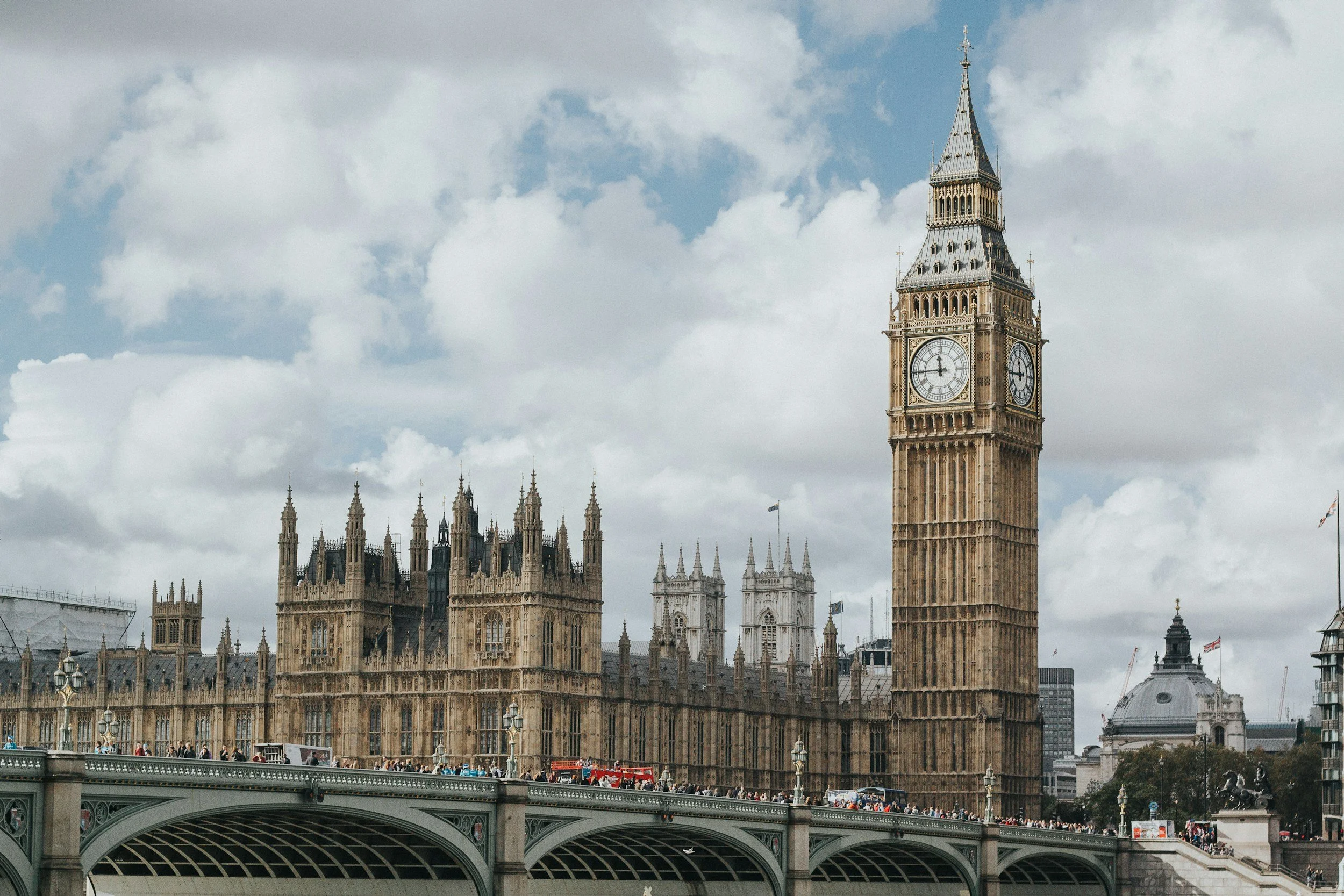
When London is viewed alongside cities such as New York, Paris, Geneva, Monaco, Singapore and Hong Kong, a compelling argument emerges. Buyers are often paying less per square metre for properties within one of the world's leading financial and cultural capitals, while benefiting from exceptional legal protections, architectural heritage and a highly liquid property market.
For discerning buyers, the question is no longer whether London is expensive. It is whether London is still priced below its long-term intrinsic value.
Looking Beyond Headline Prices
Property values should never be assessed in isolation.
Sophisticated investors compare markets internationally, considering factors such as purchasing power, supply constraints, political stability, taxation, rental demand and future capital appreciation.
Viewed through this lens, London continues to offer characteristics that few global cities can replicate:
A transparent legal system.
Strong property rights.
Global financial importance.
International education.
World-class healthcare.
Cultural influence.
Exceptional transport connectivity.
Deep liquidity across the residential market.
These fundamentals help explain why London continues to attract capital from around the world despite short-term economic cycles.
Prime Property Remains Relatively Competitive Internationally
When compared with other global wealth centres, Prime Central London often represents stronger relative value than buyers expect.
In cities such as Monaco or Hong Kong, equivalent budgets may purchase significantly smaller properties. Manhattan's premier neighbourhoods increasingly compete at similar price points, while luxury districts in Paris and Singapore continue to experience sustained upward pricing.
London, by contrast, offers remarkable diversity.
Buyers can choose between elegant Georgian townhouses, grand Victorian residences, contemporary penthouses, riverside apartments and substantial family homes across a wide range of prestigious neighbourhoods—all within one internationally recognised city.
That breadth of choice is difficult to replicate elsewhere.
A Market Built on Scarcity
One of London's greatest strengths is that very little of its finest housing can ever be recreated.
Prime neighbourhoods such as Mayfair, Belgravia, Knightsbridge and Kensington are protected by conservation policies, historic estates and strict planning controls that severely limit new supply.
Unlike many global cities where luxury towers can be built at scale, London's most desirable addresses remain fundamentally constrained.
Scarcity has historically been one of the strongest drivers of long-term residential value.
As demand grows while supply remains limited, exceptional properties become increasingly difficult to replace.
Global Demand Has Never Been Local
London has never relied solely on domestic buyers.
Its residential market attracts entrepreneurs, business owners, investors, executives and families from Europe, North America, the Middle East and Asia, many of whom view London as a long-term base for business, education or wealth preservation.
This international demand creates a diverse buyer pool that helps support market resilience even during periods of economic uncertainty.
For many overseas purchasers, buying in London is as much about stability and lifestyle as financial return.
Education, Lifestyle and Connectivity
Luxury property is ultimately a lifestyle investment.
London combines internationally respected schools and universities, outstanding private healthcare, Michelin-starred restaurants, globally recognised cultural institutions and extensive green spaces within a single city.
The Elizabeth line has further transformed connectivity, reducing journey times across the capital while providing rapid access to Heathrow Airport, the City and Canary Wharf.
For internationally mobile families, few cities offer a comparable combination of education, culture and accessibility.
The Hidden Value of Prime Central London
Prime Central London operates differently from much of the wider property market.
Many of the most desirable homes are tightly held, often remaining in the same ownership for decades. Others are sold privately through discreet introductions without ever appearing on public property portals.
This limited turnover creates an additional layer of scarcity.
For buyers, access to the hidden market can be just as important as financial capability, particularly when searching for landmark townhouses, trophy apartments or architecturally significant residences.
Why Timing Matters
Markets move in cycles.
Periods of uncertainty often create opportunities for buyers prepared to take a long-term view rather than reacting to short-term sentiment.
Historically, London's strongest long-term investors have focused less on temporary market fluctuations and more on acquiring exceptional assets in irreplaceable locations.
Because supply remains constrained and international demand continues to return over time, many buyers see today's market as an opportunity to secure properties that may become increasingly difficult to acquire in the future.
Rather than attempting to predict the precise bottom of the market, experienced investors often concentrate on purchasing the best available asset when relative value presents itself.
Value Is More Than Price Per Square Foot
Sophisticated buyers rarely make decisions based solely on headline pricing.
Instead, they assess:
The rarity of the property.
The quality of the location.
Architectural significance.
Long-term demand.
Planning restrictions.
Future supply.
International buyer appeal.
Liquidity.
Wealth preservation potential.
The strongest investments are often those that remain desirable regardless of changing market conditions.
Why Independent Advice Matters
Identifying value within London's luxury market requires more than monitoring asking prices.
An experienced independent buying agent evaluates opportunities through detailed market analysis, comparable sales, local knowledge and access to properties unavailable through public listings. Equally important, they help buyers distinguish between genuinely undervalued opportunities and properties that merely appear attractive on paper.
For acquisitions at the prime and super-prime level, informed advice can prove as valuable as access itself.
Is London Property Still Undervalued?
Whether London is "undervalued" depends on the benchmark used. Compared with its own historical highs, global peer cities and the unique combination of stability, scarcity and international appeal it offers, many experienced investors believe the capital continues to present compelling long-term value.
The most successful buyers are rarely those chasing short-term market movements. They are the ones who recognise enduring quality, acquire exceptional properties in irreplaceable locations and take a long-term view.
For those willing to look beyond headlines, London's luxury property market continues to offer opportunities that combine global prestige, lifestyle excellence and lasting investment potential—particularly when supported by expert local knowledge and access to opportunities beyond the open market.
If you are interested in complimentary advice, you can contact James https://jamesnightingall.com/contact