
Suites Reserved for Heads of State
Within ultra luxury hospitality exists a rarely examined category of accommodation that operates beyond conventional commercial logic. These are suites designed, engineered, and maintained to meet the requirements of heads of state, royal families, and individuals whose security, privacy, and operational demands exceed even the expectations of ultra high net worth travellers. Their significance lies not simply in scale or décor, but in the complex intersection of diplomacy, risk management, architectural planning, and reputational signalling.
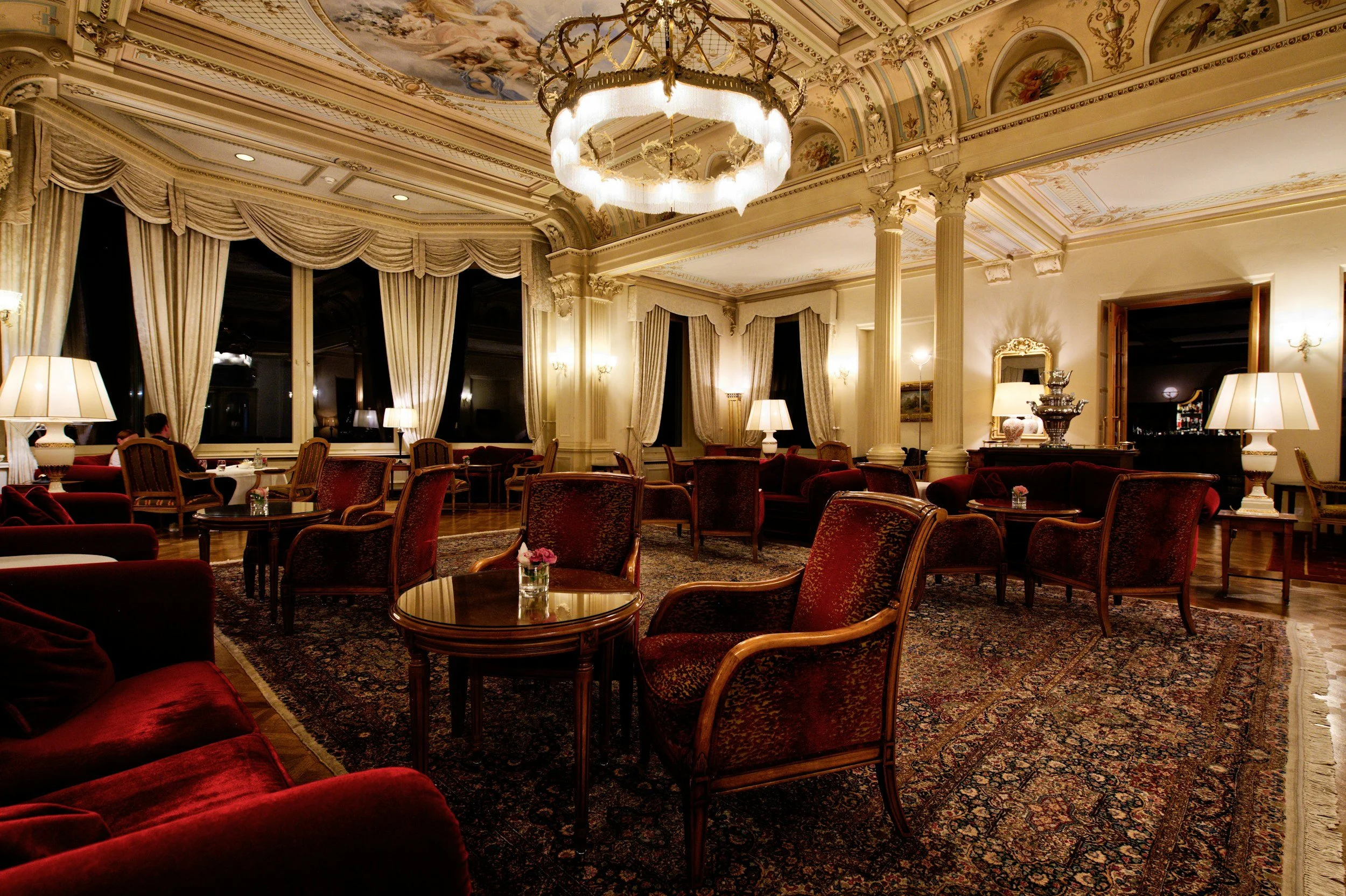
Such suites represent the most controlled environments in the hotel ecosystem. They function as temporary sovereign spaces, where geopolitical sensitivity, confidentiality, and logistical precision converge.
Why Heads of State Require a Different Hospitality Framework
Accommodating political leaders involves variables that standard luxury hospitality is not structured to handle. The risks extend beyond personal comfort into national security, diplomatic protocol, and international relations. Every design choice, service process, and access pathway must anticipate threats, privacy breaches, and operational disruptions.
Research from Deloitte and McKinsey examining the evolution of luxury services notes a widening divergence between traditional high end offerings and security driven ultra premium environments. Heads of state suites exemplify this divergence. They are less comparable to hotel rooms and more analogous to fortified private residences embedded within hospitality infrastructure.
These accommodations must satisfy overlapping requirements. Absolute discretion. Multi layered physical security. Secure communications capability. Spatial configurations suitable for confidential meetings. The ability to operate as both residence and command environment.
Architectural and Security Engineering Considerations
Unlike publicly marketed signature suites, state level accommodations are frequently designed with security as the primary organising principle. Aesthetic luxury is secondary to structural control.
Common features include restricted floor access, private lift systems, controlled sightlines, reinforced materials, and compartmentalised layouts that allow security personnel to operate invisibly. Entry and exit pathways are engineered to minimise exposure while preserving operational fluidity.
Industry commentary within high security design circles, often referenced in specialist government and risk management publications, emphasises that protective architecture is inseparable from spatial experience. Guests must feel neither confined nor exposed. Achieving this balance requires significant design sophistication.
Savills’ analyses of ultra prime residential properties reveal similar priorities among globally mobile wealth holders, particularly those with heightened security considerations. Privacy infrastructure increasingly functions as a core value driver across both hospitality and property markets.
Symbolic Geography and Diplomatic Significance
Not all cities possess hotels capable of hosting heads of state. Diplomatic hubs, financial centres, and politically significant capitals naturally attract the investment required to develop such facilities. Location therefore becomes a determinant of suitability.
President Wilson Hotel, Geneva
The President Wilson Hotel in Geneva has long been associated with state level hospitality. Geneva’s unique role as a centre for diplomacy, multilateral institutions, and international negotiations makes it a natural locus for such infrastructure. Suites designed for high security occupancy benefit from proximity to embassies, international organisations, and secure transport corridors.
Knight Frank’s global wealth and city reports frequently identify Geneva as a critical node in the geography of power, where financial capital, political diplomacy, and wealth preservation converge. Hospitality assets in such cities inherit this symbolic weight.
The Dorchester, London
In London, properties such as The Dorchester have historically served as preferred addresses for visiting dignitaries and state delegations. The city’s enduring role as a financial and political capital, combined with deep expertise in diplomatic protocol and protective services, sustains demand for accommodations capable of supporting sensitive occupancy.
London’s ultra prime ecosystem, as documented in Knight Frank and Savills research, illustrates how real estate, hospitality, and political geography interact. Prestige addresses become extensions of national and international theatre.
Operational Protocol and Service Dynamics
Service delivery within heads of state suites differs fundamentally from conventional luxury models. Standard hospitality emphasises anticipation and personalisation. State level hospitality incorporates coordination with government security agencies, diplomatic staff, and specialised logistics teams.
Staffing structures are tightly controlled. Background checks are rigorous. Information flows are compartmentalised. Routine service actions require procedural discipline to ensure confidentiality and security integrity.
UBS analyses of ultra affluent behaviour highlight that high profile individuals increasingly demand comparable discretion frameworks even outside political contexts. The operational philosophy developed for heads of state is gradually influencing broader ultra luxury hospitality standards.
Economic Logic of Ultra Secure Suites
These suites often remain unoccupied for extended periods, yet their financial rationale remains intact. They serve reputational functions, enhance a property’s global standing, and position hotels within elite diplomatic and corporate networks.
Deloitte’s hospitality industry assessments observe that certain ultra premium assets operate as prestige infrastructure rather than yield optimised inventory. Their value lies in signalling capability and attracting a specific client stratum.
The pricing of such suites, when activated, reflects this logic. Rates are rarely publicised. Transactions frequently occur within the context of official visits, delegations, or high security events where price considerations are secondary.
The Convergence of Wealth and Sovereign Privacy
A notable development in recent years is the increasing overlap between the expectations of political leaders and ultra high net worth private individuals. Extreme privacy, security engineering, and controlled environments have become priorities not only for governments but for globally exposed wealth holders.
Savills and Knight Frank both note the rising importance of security driven design within ultra prime property markets. Hospitality assets are responding to the same behavioural currents.
Conclusion: Hospitality at the Edge of Sovereignty
Suites reserved for heads of state represent the outer boundary of what hotels can provide. They are not simply accommodations but highly controlled environments where architecture, diplomacy, and security converge. Their rarity derives not from opulence alone, but from the complexity of requirements they must satisfy.
In the uppermost tiers of global hospitality, exclusivity is inseparable from control. These suites illustrate how luxury, when aligned with sovereign level expectations, becomes an exercise in precision, discretion, and infrastructural mastery rather than display.
If you are interested in complimentary advice, you can contact James https://jamesnightingall.com/contact