
The Most Difficult Hotel Suites to Book
At the highest tier of luxury travel, difficulty of access often eclipses price as the defining measure of exclusivity. Certain hotel suites operate within a category closer to rare assets than conventional accommodations. Their availability is constrained not simply by inventory limits, but by reputational gravity, client retention patterns, security considerations, and global demand concentration. These suites are frequently secured through relationships, long planning horizons, or invitation based pathways rather than transactional booking platforms.
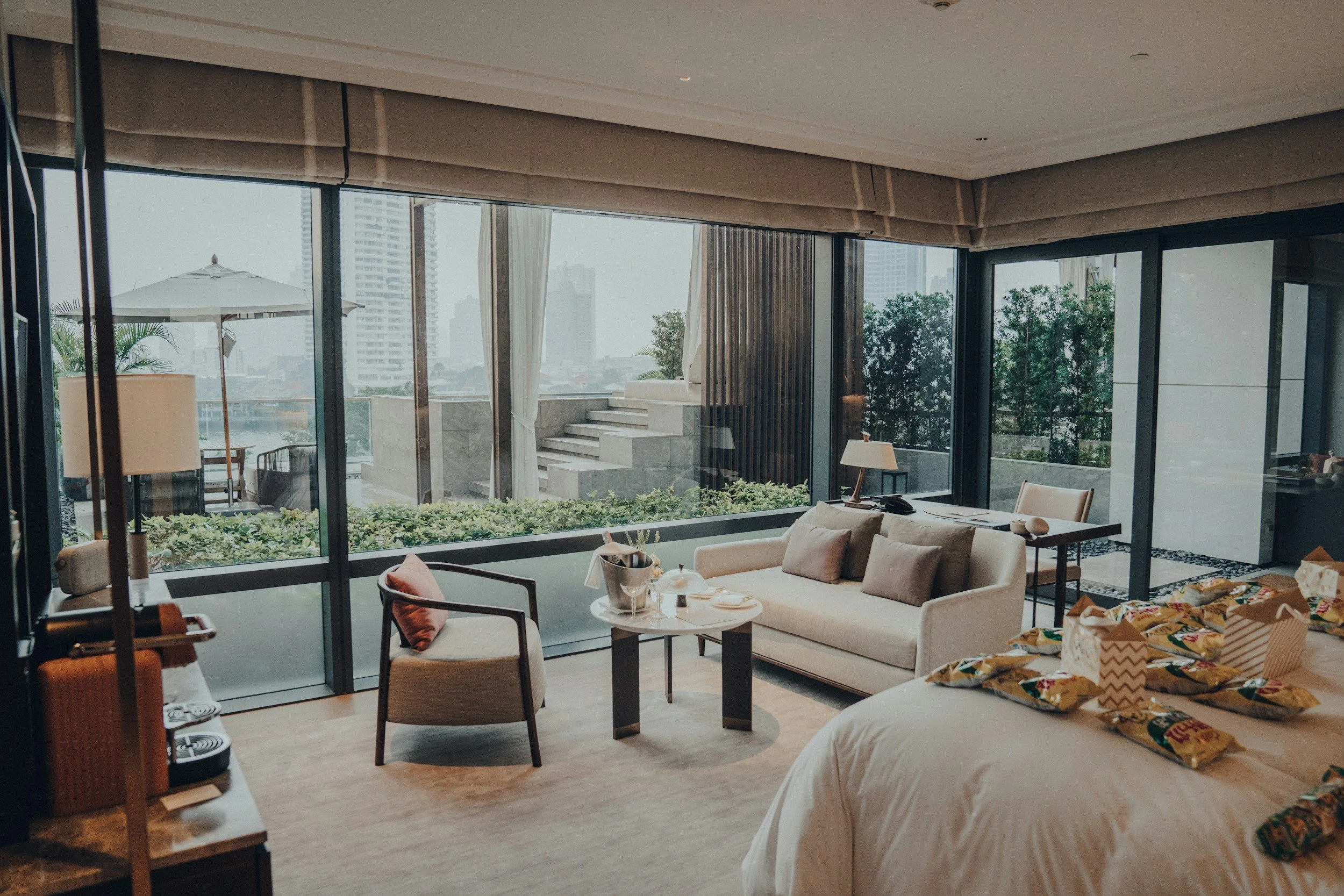
Knight Frank, Savills, Deloitte, and McKinsey have each noted that modern ultra luxury consumption is increasingly governed by scarcity economics and controlled visibility. Suites that are exceptionally difficult to reserve illustrate how hospitality, like prime real estate, is structured by supply asymmetry and buyer psychology rather than functional utility alone.
1. Royal Penthouse Suite, President Wilson Hotel, Geneva
Among globally recognised examples of extreme hospitality scarcity, the Royal Penthouse Suite in Geneva occupies a distinctive position. Its difficulty is not solely a function of headline pricing. Geneva’s role as a diplomatic and financial nexus generates episodic surges in demand from state delegations, high security clients, and globally mobile wealth holders.
Knight Frank’s global city analyses repeatedly identify Geneva as a centre of political and financial gravity. Suites capable of meeting elevated privacy and security expectations encounter structurally concentrated demand during international events and negotiation cycles.
2. The Empathy Suite, Palms Casino Resort, Las Vegas
Certain suites derive scarcity from conceptual uniqueness rather than geographic context. The Empathy Suite represents a hybrid between hospitality environment and collectible design object. Its limited inventory, combined with strong symbolic capital, narrows access through demand concentration.
McKinsey’s luxury market observations frequently emphasise that ultra affluent consumers assign disproportionate value to experiential singularity. When replication is impossible, booking difficulty intensifies irrespective of market size.
3. The Mark Penthouse, The Mark Hotel, New York
New York’s status as a global gateway city naturally amplifies demand pressure on rare hospitality inventory. The Mark Penthouse exemplifies how scale, visibility, and location prestige intersect. Periods of peak demand driven by financial, cultural, and diplomatic events produce acute availability compression.
Savills and Knight Frank both note that globally dominant cities exhibit persistent demand from internationally mobile wealth holders. Exceptional suites become subject to long horizon reservation behaviour and repeat client capture.
4. Private Island Villas With Full Estate Control
Entirely privatised island villas represent a distinct scarcity model. Inventory is structurally capped, while booking windows are often governed by minimum stay commitments and repeat guest prioritisation. High profile clientele further constrains publicly visible availability.
Deloitte’s luxury travel research consistently observes rising demand for environments delivering absolute privacy and simplified security perimeters. Difficulty arises from supply irreversibility rather than promotional strategy.
5. Aman Signature Suites Across Global Locations
Certain hospitality brands institutionalise scarcity through portfolio philosophy. Aman’s low density design logic, spatial isolation principles, and loyal client base collectively intensify reservation challenges. Availability constraints are reinforced by high repeat visitation patterns.
Industry research frequently referenced by Knight Frank and McKinsey highlights that ultra high net worth travellers increasingly prioritise privacy, restraint, and environmental control over theatrical luxury signals.
6. Heritage Palace Suites With Limited Activation Windows
Historic palaces converted into hospitality environments often contain suites whose availability is episodic rather than continuous. Royal functions, private events, or seasonal closures restrict inventory. Booking difficulty emerges from calendar constraints and ceremonial usage patterns.
Savills’ hospitality insights frequently note that heritage assets operate within non standard commercial frameworks. Scarcity is embedded in function rather than occupancy optimisation.
7. Unlisted and Relationship Only Hospitality Assets
Beyond publicly recognised properties lies a deeper stratum of suites rarely encountered through conventional channels. Access is mediated through private travel advisors, diplomatic networks, or long standing guest relationships. Informational scarcity itself becomes a gatekeeping mechanism.
UBS analyses of ultra affluent behaviour suggest that knowledge asymmetry and network embedded access increasingly shape luxury consumption patterns. Difficulty is inseparable from invisibility.
Conclusion: Booking Difficulty as a Function of Asset Economics
The world’s most difficult hotel suites to reserve behave less like hospitality products and more like scarce lifestyle assets. Their availability is governed by structural constraints, reputational capital, and demand concentration rather than price sensitivity alone. For globally mobile wealth holders, securing such suites often requires advance planning, network access, and tolerance for constrained optionality.
In extreme luxury markets, exclusivity is rarely defined by cost. It is defined by access friction.
If you are interested in complimentary advice, you can contact James https://jamesnightingall.com/contact