
Why Aman Guests Avoid Crowded Resorts
In ultra-luxury travel, the definition of value has shifted. For Aman’s clientele, luxury is no longer about scale, visibility or social energy—it is about space, control and discretion. This explains why Aman guests consistently avoid crowded resorts, even when those properties offer comparable amenities.
The preference is not incidental. It reflects a deeper alignment between guest psychology and Aman’s operating model.
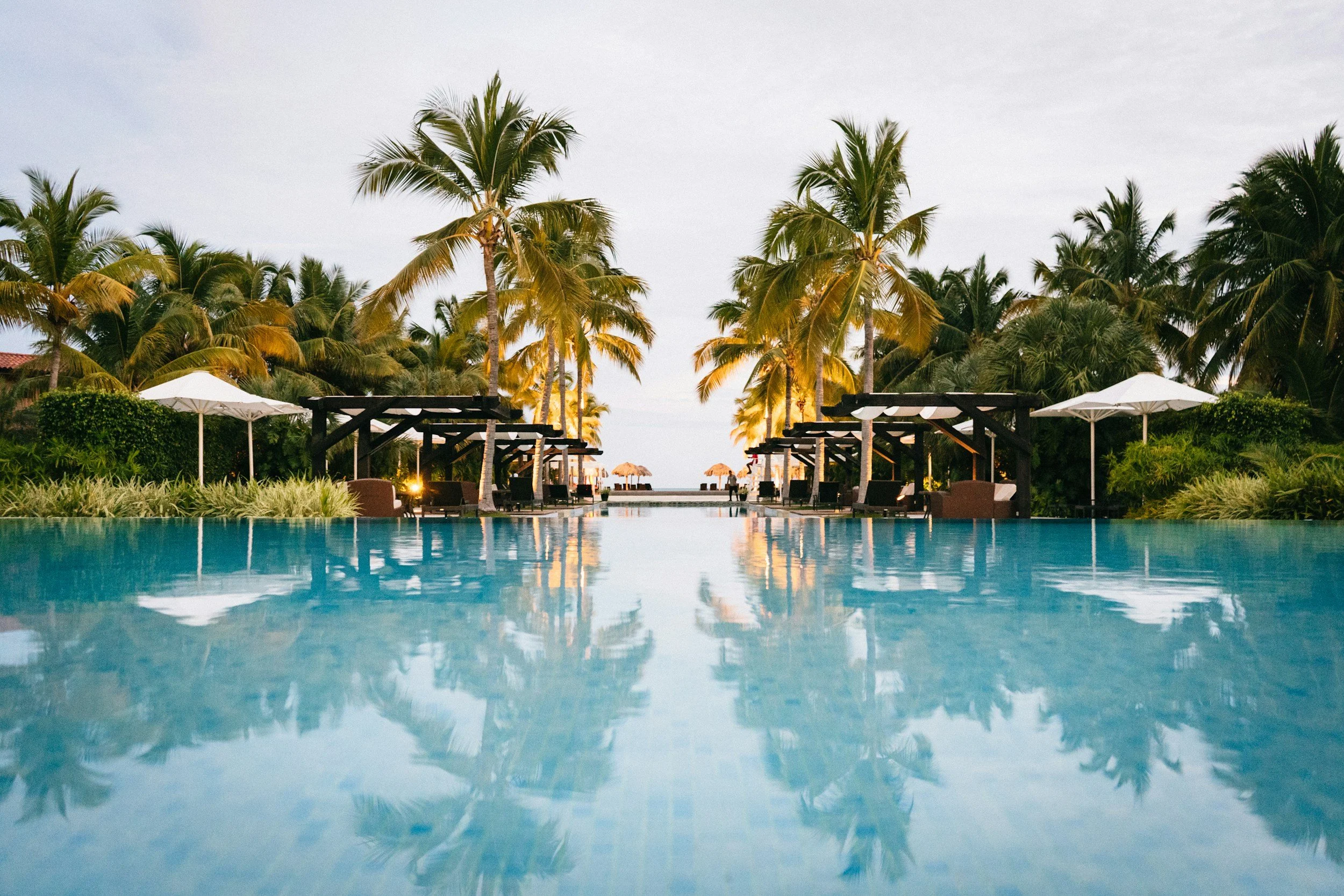
Privacy as a Non-Negotiable
Aman’s core appeal lies in its ability to create environments where guests are unseen and uninterrupted.
At properties such as Amanpulo and Amanyara, low-density layouts ensure that guest interaction is minimal. Villas are positioned to eliminate sightlines, and shared spaces are designed to feel empty even at high occupancy.
Crowded resorts, by contrast, introduce:
Visible guest traffic
Noise and unpredictability
Reduced control over personal space
For ultra high net worth travellers, this directly undermines the experience.
Space as the Primary Luxury Metric
In traditional hospitality, luxury is often measured through amenities. At Aman, it is measured through space per guest.
This includes:
Larger room and villa sizes
Greater distance between accommodations
Expansive natural surroundings
Crowded resorts optimise for occupancy and revenue density. Aman deliberately does the opposite, prioritising low guest volume and high spatial allocation.
Control Over Environment
Aman guests value the ability to control their surroundings, including:
When and where they dine
How they interact with staff
The pace of their stay
In crowded resorts, this control is reduced due to:
Shared facilities with high usage
Fixed dining schedules or reservations
Limited flexibility during peak demand
Aman’s model allows for a more fluid and personalised experience, which is difficult to replicate in high-density environments.
Discreet Service vs Visible Operations
Aman’s service philosophy is built on invisible execution. Staff operate in a way that minimises presence while maximising efficiency.
In crowded resorts, service becomes more visible and transactional:
Queue-based interactions
Delays in service delivery
Increased staff-guest interaction in public spaces
For Aman guests, discretion is as important as service quality. Visibility itself becomes a compromise.
Security and Anonymity
For many ultra high net worth individuals, travel involves considerations beyond comfort, including security and anonymity.
Low-density resorts provide:
Controlled access points
Fewer unknown individuals on-site
Reduced exposure in public areas
Crowded environments increase unpredictability and reduce the ability to maintain a low profile.
Psychological Value of Exclusivity
Exclusivity is not only physical—it is psychological.
Aman guests are drawn to environments where:
Access is limited
Availability is constrained
Experiences feel curated rather than shared
Crowded resorts, even at a luxury level, dilute this perception by prioritising scale and accessibility.
Alignment with Modern UHNW Travel Trends
Global travel patterns among ultra high net worth individuals have shifted towards:
Private villas over hotel rooms
Remote destinations over central hubs
Experience-led travel over amenity-driven stays
Aman’s portfolio aligns closely with these trends, while crowded resorts often reflect an earlier model of luxury focused on volume and visibility.
The Role of Architecture and Planning
Aman properties are designed to avoid crowding at a structural level:
Separate pathways and entrances
Strategic landscaping to create visual barriers
Decentralised layouts
This ensures that even at full occupancy, the resort never feels busy.
By contrast, many large resorts rely on centralised facilities, increasing the perception of density.
Conclusion
Aman guests avoid crowded resorts because those environments conflict with the core principles of modern ultra-luxury travel—privacy, space and control.
Aman’s success lies in its ability to deliver these elements consistently, creating environments where guests can disengage from external pressures and operate on their own terms.
For ultra high net worth travellers, the absence of crowds is not simply a preference. It is a defining feature of what luxury now represents.
Sources
Aman Group brand philosophy and design principles
Luxury hospitality reports on low-density resort models
UHNW travel behaviour studies and privacy trends
Architectural analyses of resort planning and guest flow